The Aroma is one of Amazon's enduring best-sellers because it is simple, dependable, and costs about as much as a bag of good sushi rice. The Zojirushi earns its premium through Neuro Fuzzy technology — an advanced cooking algorithm that adjusts heat in real time — and a loyal base of owners who say the results justify every dollar of the gap. Drawing on thousands of customer reviews and YouTube reviewer coverage, here's how the two compare.
| Aroma ARC-914SBD | Zojirushi NS-ZCC10 | |
|---|---|---|
| Image |  |
 |
| Customer rating | 4.5 ★ (8,086) | 4.5 ★ (8,032) |
| Confidence | 100/100 | 100/100 |
| Price | ~$30 | ~$200 |
| Buy | Check on Amazon | Check on Amazon |
What Owners Say About the Aroma ARC-914SBD
4.5★ across 8,086 customer reviews · Confidence: 100/100 · ~$30
With over 8,000 reviews and a 4.5-star average, the Aroma ARC-914SBD has become the default recommendation when someone asks for a capable rice cooker on a tight budget. Owners consistently describe it in "does exactly what it's supposed to" terms — plug it in, press a button, come back to cooked rice. The built-in delay timer draws particular praise from owners who want rice ready the moment they walk in the door, and the digital controls are frequently called out as more intuitive than the dial-based budget alternatives.
The main caveat owners raise: the keep-warm mode loses steam — literally — after an hour or so. Owners who eat in shifts or leave rice sitting for extended periods report it dries out faster than they'd like. Versatility is the other common complaint; reviewers who tried it on brown rice or mixed grains found results inconsistent compared to the white-rice performance.
Read the full review → · Check price on Amazon →
What Owners Say About the Zojirushi NS-ZCC10
4.5★ across 8,032 customer reviews · Confidence: 100/100 · ~$200
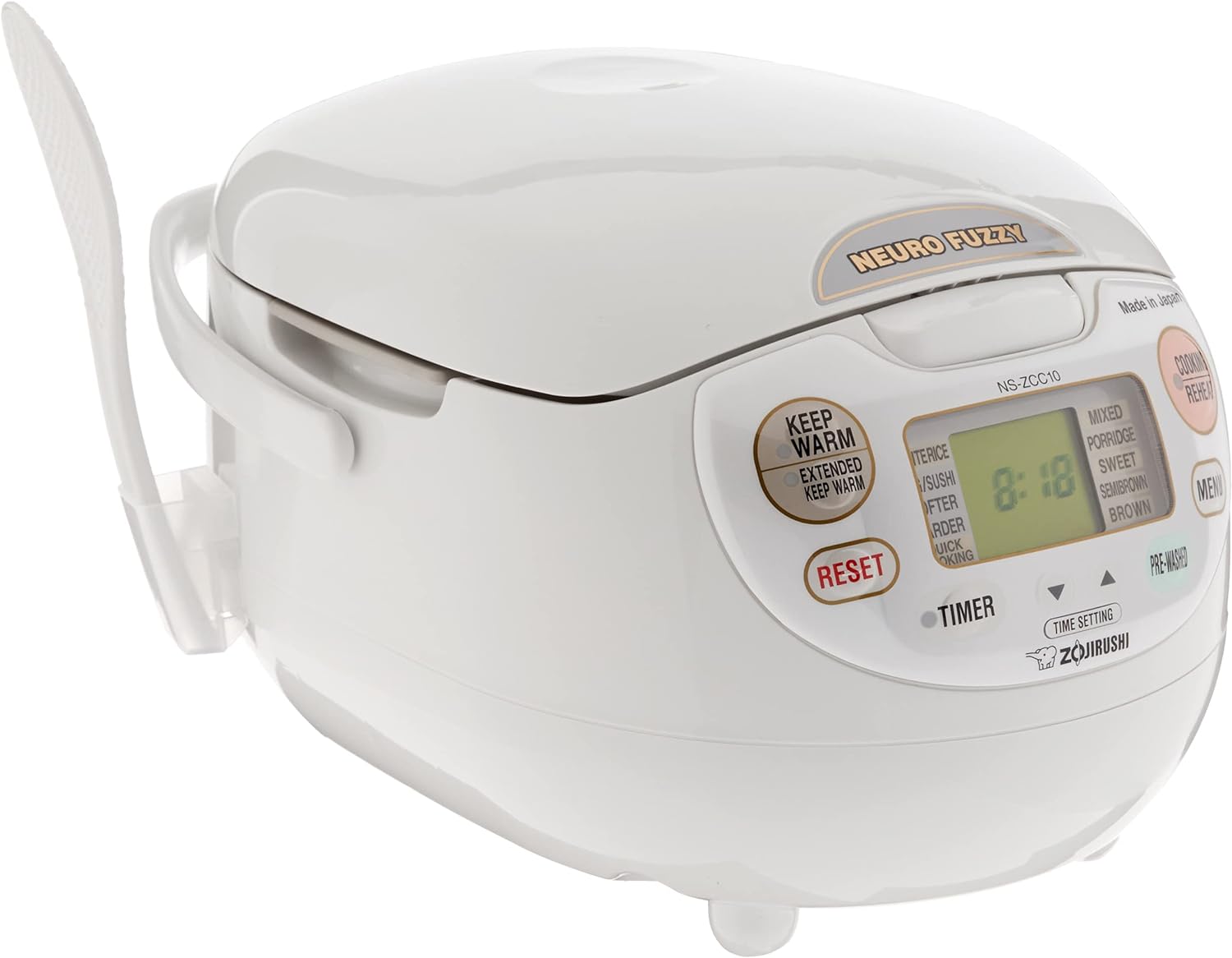
The Zojirushi NS-ZCC10 carries the same 4.5-star average as the Aroma — from a customer base that paid seven times as much and still came back with top marks. Owners specifically credit the Neuro Fuzzy cooking system, which adjusts temperature and timing automatically throughout the cook cycle. Reviewers report noticeably better rice texture compared to their previous budget cookers, with short-grain Japanese rice and brown rice cited most often as areas where the improvement is obvious. The keep-warm function is praised as genuinely effective across multiple hours, a direct contrast to the Aroma on the same dimension. Many owners frame the NS-ZCC10 as a long-term appliance — something bought once and not replaced.
The primary caveat from owners: cook time is longer than basic models. The Neuro Fuzzy algorithm adds time to the cycle compared to a straightforward element-on / element-off approach, which matters if rice-in-20-minutes is a hard requirement in your household.
Read the full review → · Check price on Amazon →
Where They Differ
The most striking fact in this comparison is that both products earn the same 4.5-star average from nearly identical numbers of reviewers. That convergence tells you something important: owners on both sides of a $170 price gap feel they got what they paid for. The question is which side you belong on.
Aroma ARC-914SBD owners write reviews that center on value and simplicity. The 4-cup uncooked / 8-cup cooked capacity covers couples and small families without wasted space, and owners consistently report it handles everyday white rice without fuss. Where the reviews turn critical is around sustained performance: keep-warm quality after the first hour, and uneven results when owners venture beyond white rice into brown rice or multi-grain settings.
Zojirushi NS-ZCC10 reviewers more often focus on texture and consistency as the reason they spent more. The Neuro Fuzzy system monitors conditions throughout the cook and makes adjustments, which owners report produces noticeably more consistent results — especially for harder-to-nail varieties like Japanese short-grain, brown rice, and porridge. The keep-warm mode is a recurring highlight; owners describe rice that stays at proper eating quality for hours rather than drying out. Multiple cooking settings (white rice, mixed, porridge, quick-cook, and more) also draw mention from owners who use the machine for more than one purpose.
Capacity is a genuine differentiator worth noting: the Zojirushi NS-ZCC10 handles 5.5 cups uncooked versus the Aroma's 4 cups — a meaningful step up for households that regularly cook for four or more people.
How We Compared
Confidence scores combine a product's star rating with the volume of customer reviews behind it — the more people who voted, the harder that average is to argue with. The highest-scoring product is set to 100 and others are scaled from there. In this matchup, both products score so closely (4.5 stars each, roughly 8,000 reviews each) that both round to 100/100.
Well Seasoned's individual reviews consolidate Amazon customer feedback and YouTube reviewer coverage; this comparison aggregates those reviews. Prices and ratings reflect values recorded at the time of each individual review and may have changed.
When to Choose Which
| If you care most about… | Choose — why |
|---|---|
| Lower upfront price | Aroma ARC-914SBD — ~$30 vs ~$200, a $170 difference |
| Largest body of customer feedback | Aroma ARC-914SBD — 8,086 vs 8,032 reviews (essentially tied, but technically ahead) |
| Highest customer rating | Tie — both earn 4.5★ across 8,000+ reviews |
| Keep-warm quality over multiple hours | Zojirushi NS-ZCC10 — owners consistently report rice stays table-ready longer |
| Versatility across rice types and cooking modes | Zojirushi NS-ZCC10 — Neuro Fuzzy logic and multiple settings handle brown rice, porridge, and mixed grains more reliably |
| Premium pick (budget isn't the constraint) | Zojirushi NS-ZCC10 — consistent texture across rice varieties and superior long-term keep-warm, backed by 8,000+ satisfied owners who paid full price |
Pick the dimension that matches what you care about — neither is universally better.