Drawing on more than 6,200 combined customer reviews and YouTube reviewer coverage, here's how the two immersion blenders compare across price, performance patterns, and what owners actually report.
| Breville Control Grip | Cuisinart Smart Stick | |
|---|---|---|
| Image | 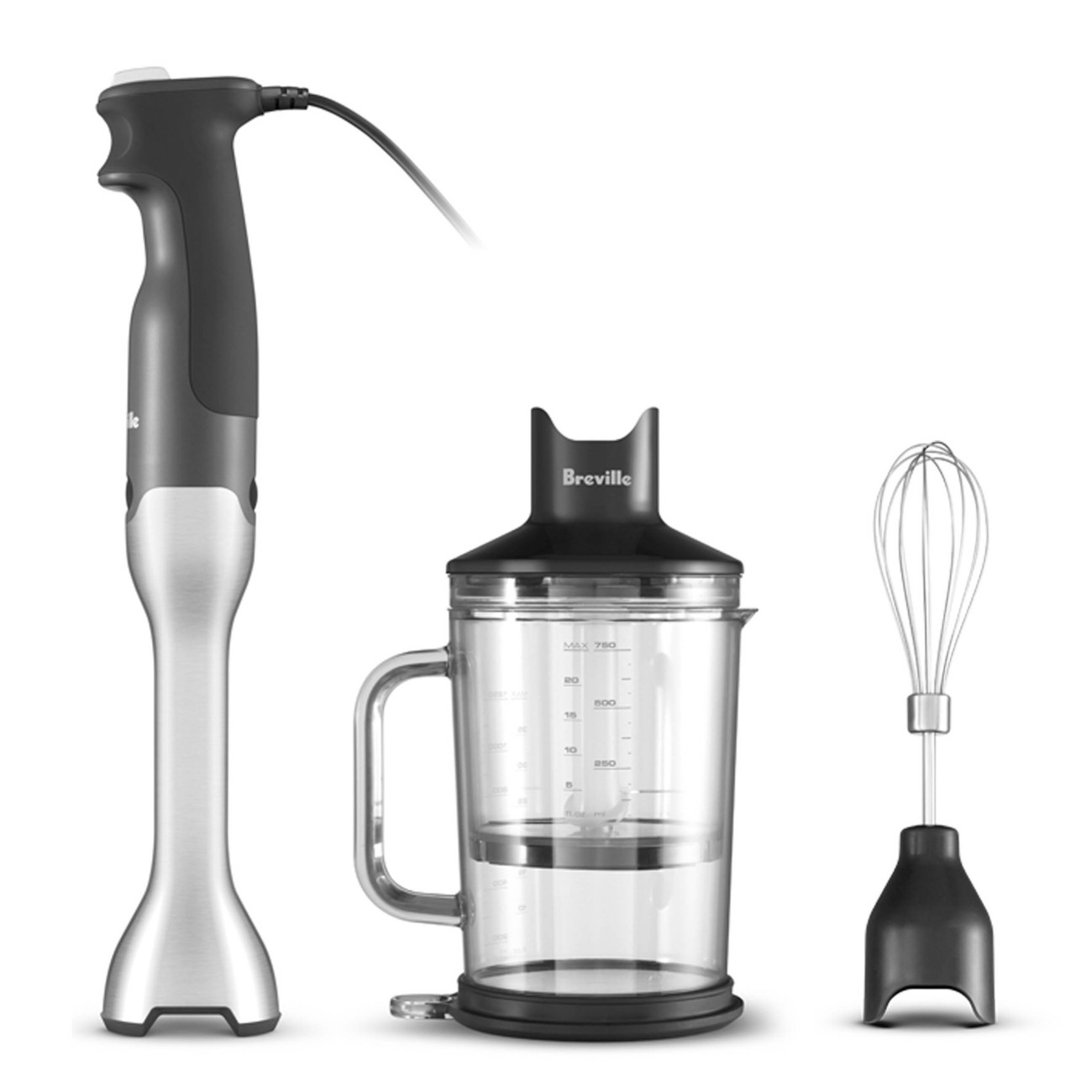 |
 |
| Customer rating | 4.5 ★ (3,486) | 4.6 ★ (2,754) |
| Confidence | 100/100 | 99/100 |
| Price | ~$130–$150 | ~$40 |
| Buy | Check on Amazon | Check on Amazon |
What Owners Say About the Breville BSB510XL Control Grip
4.5★ across 3,486 customer reviews · Confidence: 100/100 · ~$130–$150
Across 3,486 customer reviews, the Breville Control Grip earns consistent praise for two things: the ergonomic non-slip grip that owners say genuinely reduces hand fatigue during extended use, and the variable speed control that gives fine-grained command over blending intensity. Owners frequently mention using it for everything from silky bisques to thick fruit purées, noting that the brushed stainless steel shaft feels noticeably more sturdy than plastic competitors. YouTube reviewers frequently highlight the anti-suction bell design, which owners echo — many say splatter is far less of an issue than with cheaper models.
The main caveat owners report is the price. At $130–$150, the Breville is three to four times the cost of the Cuisinart, and a portion of reviewers say it's more hand blender than they actually needed for everyday soup and smoothie tasks.
Read the full review → · Check price on Amazon →
What Owners Say About the Cuisinart CSB-75 Smart Stick
4.6★ across 2,754 customer reviews · Confidence: 99/100 · ~$40
With 2,754 reviews at 4.6 stars — the highest star rating of the two — the Cuisinart CSB-75 is a case study in owners getting what they paid for and being happy about it. The most repeated theme across reviews is simplicity: two speeds, a single button, rinse under the tap and done. Owners regularly call it a "set it and forget it" appliance for routine kitchen tasks — blending soups, pureeing baby food, mixing salad dressings. The lightweight build also gets frequent mentions as a positive, particularly from owners who find heavier blenders fatiguing.
The primary complaint in the Cuisinart's reviews is the two-speed limitation. Owners who attempt thicker tasks — nut butters, frozen smoothie bases, dense vegetable soups — report the motor can struggle, and the lack of granular speed control makes it harder to dial in the right texture. Some reviewers also note the plastic shaft feels less durable than stainless alternatives over time.
Read the full review → · Check price on Amazon →
Where They Differ
The most obvious difference is price — the Breville costs roughly three to four times more than the Cuisinart. But the gap isn't just marketing; it maps to real differences owners describe in their reviews.
Speed control is the clearest functional dividing line. The Cuisinart gives owners two fixed settings: low and high. The Breville's variable speed system lets owners ramp up or ease off mid-task. Reviewers of the Breville frequently mention this when describing delicate emulsifications or achieving a specific soup consistency — precision that two-speed owners report simply isn't on the table.
Build and material quality is the second major theme. Breville owners consistently describe the stainless steel shaft and grip as premium; Cuisinart owners describe theirs as functional. Neither group reports widespread durability failures, but the tone of the feedback differs — Breville owners sound like they're describing a tool they plan to keep for years; Cuisinart owners sound like they're satisfied with solid performance from an affordable appliance.
Notably, despite all those premium traits, the Breville does not outscore the Cuisinart on star rating — 4.5★ vs 4.6★. That's a reminder that customer satisfaction is relative: Cuisinart buyers at $40 have very different expectations than Breville buyers at $140, and both groups appear to be getting what they expected.
How We Compared
The confidence score reflects how reliable each product's star rating is likely to be: a rating backed by thousands of reviews is harder to argue with than one backed by dozens. The score combines star rating with review volume — the more reviews, the more weight the rating carries — and rescales so the top scorer is 100. Here, the Breville's 100/100 reflects its slightly larger review base; the Cuisinart's 99/100 shows it's nearly as well-documented.
Well Seasoned's individual reviews consolidate Amazon customer feedback and YouTube reviewer coverage; this comparison aggregates those reviews. Prices and ratings reflect values recorded at the time of each individual review and may have changed.
When to Choose Which
| If you care most about… | Choose — and why |
|---|---|
| Highest customer star rating | Cuisinart CSB-75 — 4.6★ vs 4.5★ |
| Largest body of customer feedback | Breville Control Grip — 3,486 vs 2,754 reviews |
| Lower upfront price | Cuisinart CSB-75 — ~$40 vs ~$130–$150 |
| Variable speed and precision control | Breville Control Grip — variable speed vs 2 fixed speeds |
| Premium build (if budget isn't the constraint) | Breville Control Grip — stainless steel shaft, anti-suction design, ergonomic grip widely praised by owners |
Pick the dimension that matches what you care about — neither is universally better.