Breville BTA840XL Die-Cast 4-Slice Smart Toaster Review: Premium Toast That Earns Its Counter Space
The Breville BTA840XL is what happens when someone takes toast seriously enough to over-engineer it. At roughly $200, it sits well above the supermarket toasters most kitchens have on the counter — and after looking at how it's built and how owners describe living with it long-term, the case for spending the extra money mostly holds up, with caveats.
What you're actually buying
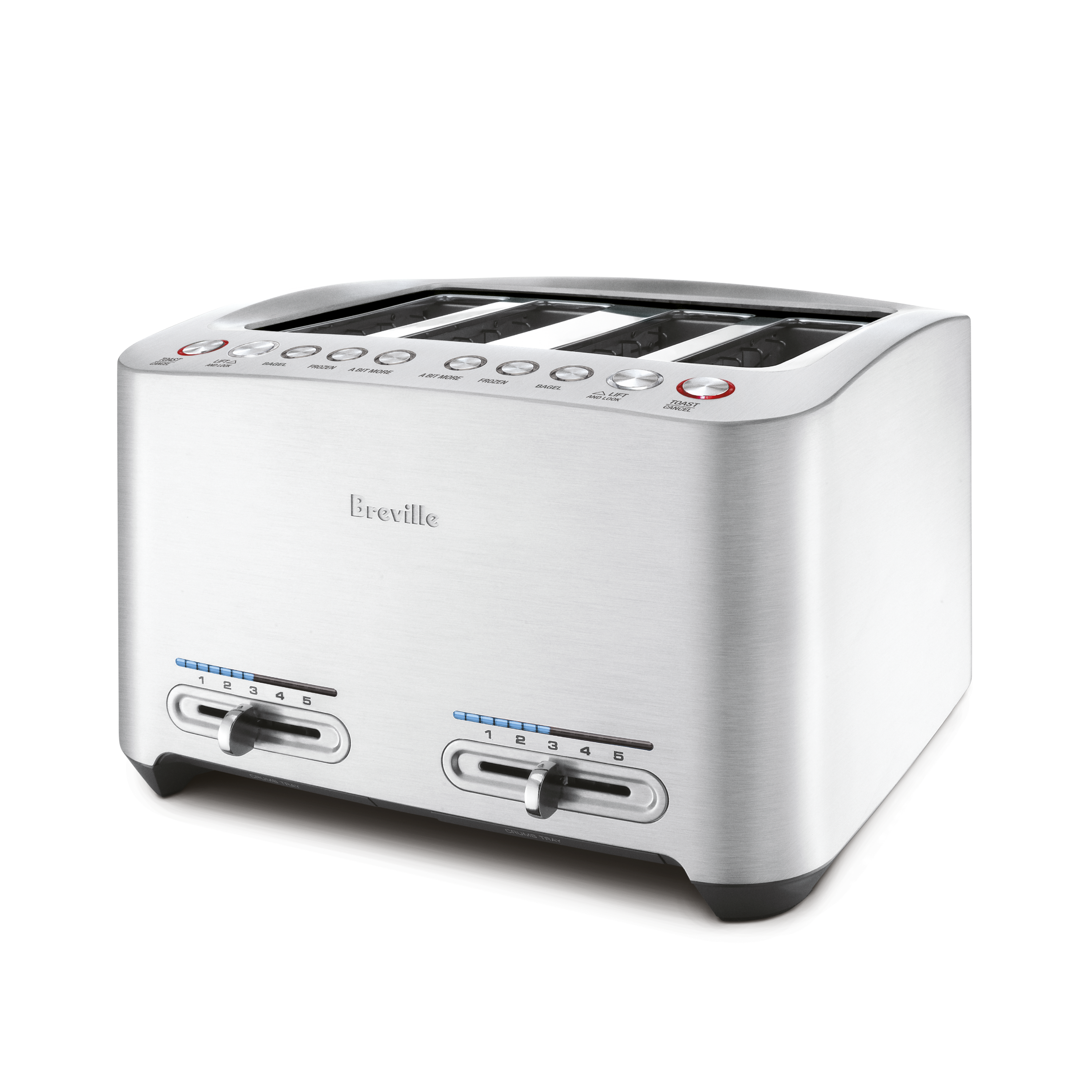
The BTA840XL is a 4-slice, long-slot toaster in brushed stainless steel. The body is single-piece die-cast metal — meaning it's heavy, doesn't flex, and looks more like a small appliance than a $30 plastic-and-metal toaster. The slots are extra-wide and extra-long, which is the practical difference most people will notice: a bagel half, a slice of artisan sourdough, or a thick Texas-toast cut all fit without jamming.
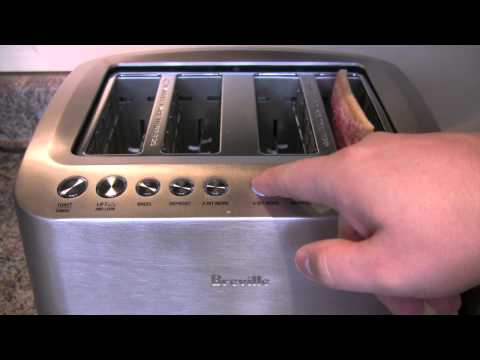
The user-facing features are where Breville's branding earns its keep. There's a motorized lift-and-look function (you can peek mid-toast without canceling the cycle), a "A Bit More" button for when your toast is close but not quite there, a Frozen setting, a Bagel mode that toasts only the cut side, a Crumpet mode, and an LED progress indicator that counts down the remaining toast time. The browning dial has fine increments rather than the usual vague 1–6 scale.
The footprint is the trade-off. This is a long-slot 4-slice — it's a wider, longer chunk of stainless steel than a standard side-by-side 4-slot toaster, and it will dominate whichever counter section it lives on.
Performance and real-world use
Independent testing has consistently put this toaster near the top of its category for even browning across slices and across the four slots — a common failure mode in cheaper 4-slice toasters is that the middle slot runs hotter than the outer ones. Consumer Reports has rated the BTA840XL favorably for toasting performance, and Zappos buyers leave roughly three-quarters of their ratings at 5 stars, citing toast quality, ease of use, and the look of the thing as the main reasons.
In practice, the "A Bit More" button is the feature people end up using most. The normal toast cycles are accurate enough that you rarely need it, but for thicker artisan slices or when you're toasting from frozen, a brief top-up beats running a whole new cycle and burning the bread. The motorized lift is genuinely useful for kids or for short people who don't want to fish small slices out of a hot toaster with a fork.
Owners report long service lives — multi-year daily use is common in reviews — which is the strongest argument for paying $200 for a toaster. A $30 toaster that dies in two years and a $200 toaster that lasts a decade are roughly the same per-year cost, and the $200 one makes better toast for every one of those years.
- Die-cast metal body feels substantially more solid than plastic-bodied competitors and tends to age well
- Even browning across all four slots, which is uncommon in this price range and rare in cheaper 4-slice models
- Extra-wide, extra-long slots fit bagels, sourdough, and thick artisan slices without forcing
- "A Bit More" button and motorized lift-and-look are small features you end up using constantly
- LED countdown timer means you actually know when your toast will be done
- Long reported lifespan in owner reviews — multi-year daily use is the norm rather than the exception
- Long-slot footprint takes up notably more counter than a standard 4-slot toaster
- ~$200 price tag is hard to justify if you only toast bread once a day or for one person
- No bread-type sensor — settings are manual, so dense or oily breads still need user adjustment
- Stainless exterior shows fingerprints easily and benefits from regular wipe-downs
- Replacement and repair options are limited; if a heating element fails out of warranty, you're typically buying a new toaster
People who toast bread daily, for two or more eaters, and who care about even results across bagels, sourdough, and thicker slices. It's also a defensible upgrade for anyone who has gone through two or three cheap toasters in five years and is tired of replacing them.
Anyone who toasts once or twice a week, single-person households, and anyone with a tight counter who needs a compact 2-slot model. If your toasting is mostly white sandwich bread and you don't care about even browning, a $40 toaster will do the job.
A premium toaster that mostly justifies its premium. The die-cast build, even browning, and small thoughtful features make it a clear step up from supermarket models, and the long reported lifespan keeps the per-year cost reasonable. The counter footprint and price will make it overkill for some kitchens, but for a household that actually uses a toaster every day, this is a buy-once kind of appliance. 4.5 / 5.