Field Company No. 8 Cast Iron Skillet Review: The Boutique Lodge Alternative Worth the Premium?
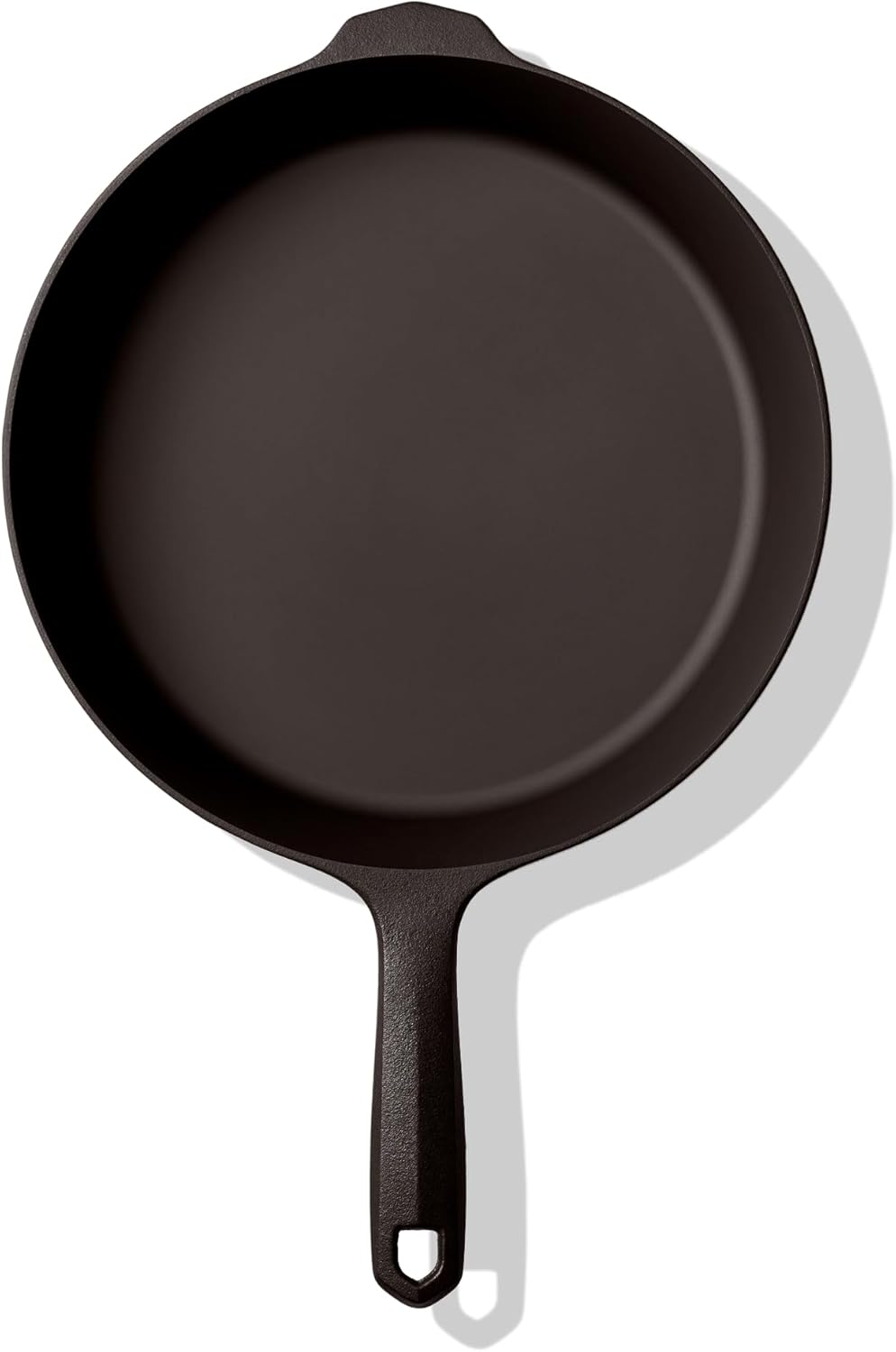
The Field Company No. 8 is the skillet that re-opened the conversation about American cast iron. It's lighter than a comparable Lodge, polished to a smooth machined surface, and priced like a piece of cookware you're supposed to hand down. After everyday cooking — eggs, steaks, cornbread, sheet-pan-style roasts — it earns most of its hype, but not all of it.
What you're actually buying
The No. 8 is Field Company's medium skillet: 10¼ inches outer diameter, an 8¾-inch flat cooking surface, 2-inch walls, and 16⅛ inches total length including the long, slim handle. It weighs about 4.5 pounds — noticeably lighter than the roughly 5.4-pound Lodge 10.25-inch cast iron skillet. The piece is cast in the US, machined to a smoother finish than entry-level cast iron, then pre-seasoned with grapeseed oil at the factory. It ships in low-key packaging with a single-page care card, and that's it.
Compared to a Lodge L8SK3, the differences are immediately tactile: the handle is longer and easier to grip, the cooking surface is visibly smoother, and the pan tilts more easily because of the reduced weight. Compared to other boutique skillets like Stargazer or Smithey, the Field sits in roughly the same price band and serves the same buyer.
Performance and real-world use
Heat behavior is classic cast iron — slow to heat, generous with retention, no surprises. Preheated over medium for five or six minutes, the surface delivers the deep, even brown you want on a steak and holds it through a flip. On gas it's predictable; on induction it tracks the burner cleanly thanks to its mass. With a thin film of oil and a properly preheated pan, eggs slide. Not Teflon-slide, but they release without surgery, which is the realistic standard for new cast iron.
The smoother machined surface helps both with food release and with cleaning. A quick wipe with a paper towel handles most cooks; for the rest, hot water and a chainmail scrubber are enough. Seasoning builds quickly when you cook real food in it — the first month of basic frying and roasting was enough to bring the surface to a glossy dark brown.
The long handle is the design win. It stays cooler longer than a stubbier Lodge handle (still get a mitt for anything over a few minutes on the stovetop), and the angle makes one-handed pan flips comfortable. The helper handle on the opposite side is small but functional for lifting the pan out of the oven.
- Noticeably lighter than equivalent Lodge skillets — meaningful for daily use
- Smooth machined cooking surface releases food cleanly once seasoned
- Long handle stays cooler and balances better when lifting
- Pre-seasoning is even and ready to cook on out of the box
- Made in the US with a transparent supply story
- Holds and conducts heat the way good cast iron should
- About 3–4x the price of a comparable Lodge for performance that is better but not transformatively so
- Smaller helper handle is awkward for lifting a fully loaded pan with one hand
- Smoother surface still needs seasoning built up before it earns the "non-stick" comparisons in marketing copy
- Pre-seasoning, while even, is light — easy to dull early if you wash with soap too aggressively
- Boutique boom means stock and lead times are inconsistent at Amazon vs. Field's direct site
Cooks who already know they like cast iron and have decided they want the nicest one. Anyone who finds a 10-inch Lodge fatiguing to lift with one hand. Gift-givers looking for cookware that reads as a deliberate choice rather than a Sunday-morning impulse. People who care that their gear is made in the US.
Anyone who's never owned cast iron — a $30 Lodge teaches you all the same lessons. Cooks who routinely deglaze with high-acid liquids or cook a lot of long tomato braises (any uncoated cast iron will fight you here). Heavy-duty restaurant-style cooks who want a workhorse they can abuse — a Lodge will outlast a Field in that role and cost a fraction to replace.
4/5. The Field No. 8 is genuinely better cast iron than the budget standard — lighter, smoother, better balanced — and the build quality justifies a real premium. It just doesn't justify *every* dollar of the premium for everyone. If you cook in cast iron daily and want the nicest version, this is the easy call. If you cook in cast iron occasionally, your money goes further somewhere else.
