KitchenStar 14-Inch Pizza Stone Review: Better Crust at Home?

The KitchenStar 14-inch round pizza stone is one of the most popular pizza stones on Amazon, with over 21,000 ratings averaging 4.7 stars. Made from natural cordierite and bundled with a stainless steel rack and plastic scraper, it promises to transform a standard home oven into a credible pizza-making setup — and for most regular home bakers, it follows through. That said, there are real expectations to set before you buy.
Product Overview
The KitchenStar 14-inch stone is made from natural cordierite, a dense porous mineral that absorbs heat steadily and draws moisture out of pizza dough as it bakes. At 5/8 inch thick, it sits in the practical sweet spot between thin tiles that heat unevenly and massive slabs that are hard to move and store. KitchenStar rates it to 1,800°F — well above any home oven's maximum — which signals adequate heat tolerance for normal use without worrying about thermal damage.
| Spec | Detail |
|---|---|
| Size | 14 inches (round) |
| Thickness | 5/8 inch |
| Material | Natural cordierite |
| Heat Resistance | Up to 1,800°F |
| Includes | Stainless steel rack, plastic scraper |
| Suitable For | Oven and BBQ grill |
| Dishwasher Safe | No |
| Available Sizes | 12", 14", 15×12" rectangular, 16" |
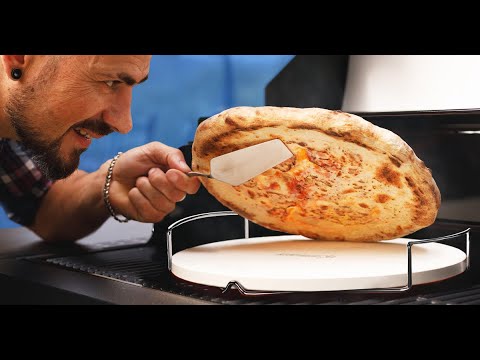
The kit includes a stainless steel rack with handles — a more useful addition than it sounds — and a plastic scraper for cleanup. KitchenStar also offers a 12-inch version for smaller ovens, a 15×12-inch rectangular stone, and a 16-inch round for cooks who make large-format pizzas. The 14-inch is the most versatile for the majority of standard home oven sizes.
Performance & Real-World Use
The mechanism behind a pizza stone is straightforward: cordierite is porous, and as the pizza bakes the stone actively draws moisture out of the dough. That wicking effect is what produces a crisper, drier bottom crust than you can get from a bare oven rack or a standard aluminum sheet pan.
Getting there requires patience. Reviewers across expert roundups and user reviews consistently report that the stone needs 45 to 60 minutes of preheating at the oven's maximum temperature — typically 450 to 550°F in a home kitchen — before the first pizza goes in. Skipping or shortening this step is the leading cause of underwhelming results; the stone has to reach full temperature throughout its thickness, not just on the surface. Once properly preheated, the improvement is real and repeatable: golden-brown, structurally sound bottom crust rather than the pale, slightly soggy result a cold pan produces.
The stainless steel rack that comes in the kit earns consistent praise in user reviews. Handling a hot stone loaded with cheese and toppings is genuinely awkward without a grab point, and the rack makes in-and-out oven transfers safer and less stressful. It's an accessory many competitors sell separately.
The stone works equally well on a covered gas or charcoal grill, sitting directly on the grates and preheated with the lid closed. This gives outdoor summer pizza nights a more authentic, slightly smoky character without a dedicated outdoor pizza oven.
America's Test Kitchen testing found that low-carbon steel (baking steel) outperforms cordierite stone on heat conductivity — steel transfers heat faster and more evenly, producing slightly better crust on the bottom. However, quality baking steels typically cost $75–$100 or more. For casual home pizza nights, the performance gap between a well-preheated cordierite stone and a baking steel is meaningful but not dramatic enough to justify doubling the price for most cooks.
Cleaning requires strict rules. Let the stone cool completely after use — never run cold water on it while hot. Use the included plastic scraper to knock off food debris, then rinse under water and scrub gently with a stiff brush. No soap, ever: detergent penetrates the pores and transfers a soapy aftertaste to future bakes. Staining is permanent and inevitable — the stone will darken and develop food marks over time, which is normal and does not affect performance or food safety.
- Genuine crust improvement — : the porous cordierite draws moisture from dough, producing noticeably crispier bottom crusts compared to a standard baking pan
- 5/8-inch thickness — retains heat well through a full bake without being overly heavy or awkward to store
- Stainless steel rack included — makes hot-stone oven transfers significantly safer — an accessory many stones don't ship with
- Oven and grill compatible — : same stone handles indoor baking nights and outdoor grill setups year-round
- 1,800°F heat tolerance — means no anxiety about normal home-oven use, including broiler finishes
- 21,000+ reviews at 4.7 stars — represents unusually broad customer validation across real home bakers
- Strong value at ~$36 — , roughly half the cost of comparable-footprint baking steels
- Baking steel outperforms cordierite — on heat conductivity; for the crispest possible home-oven crust, steel is the better material
- 45–60 minutes of preheating required — for optimal results — not practical for a quick weeknight meal without planning ahead
- No soap — ever — : the hand-wash-only rule catches new owners off guard, and a single soapy wash can leave off-flavors that persist for several bakes
- Permanent staining — : the stone darkens and absorbs food marks; cosmetically this looks rough, but it is unavoidable with any porous stone
- Cracking risk — if temperature changes are extreme — for example, placing a stone from a cold garage into a screaming-hot oven, or rinsing a hot stone under cold water; normal use within the oven is safe
- 14-inch diameter — means practical pizza size tops out around 12 inches with a margin; cooks who routinely make larger pies need the 16-inch version
- Requires storage space — : a 14-inch stone doesn't tuck away easily; many owners simply leave it in the oven permanently, which can affect baking times for other dishes
The KitchenStar 14-inch cordierite pizza stone is exactly what 21,000 reviewers say it is: a reliable, well-priced tool that meaningfully improves home pizza results. Preheat it fully, follow the soap-free cleaning rule, and it will consistently deliver crispier crusts than anything a bare pan can manage. The limitations — long preheat time, permanent staining, and cordierite's slight disadvantage versus steel — are real, but they apply to any pizza stone at this price point. For most home cooks who make pizza weekly and don't want to spend $100 on a baking steel, this is the right call.
Sources
- America's Test Kitchen: Best Pizza Stones & Baking Steels of 2024
- 10 Best Pizza Stones, Expert Reviews (May 2026) — Pura Vida by Brandt
- Pizza Stone vs. Baking Steel: Complete Baking Surfaces Guide — PizzaBlab
- Cordierite, Ceramic, or Steel: Choosing the Right Pizza Stone Material — Karel Dekar
- KitchenStar 14-Inch Pizza Stone — Manufacturer Product Page