Lodge 5-Quart Cast Iron Dutch Oven (L8DOL3) Review: The Honest American Workhorse Under $70
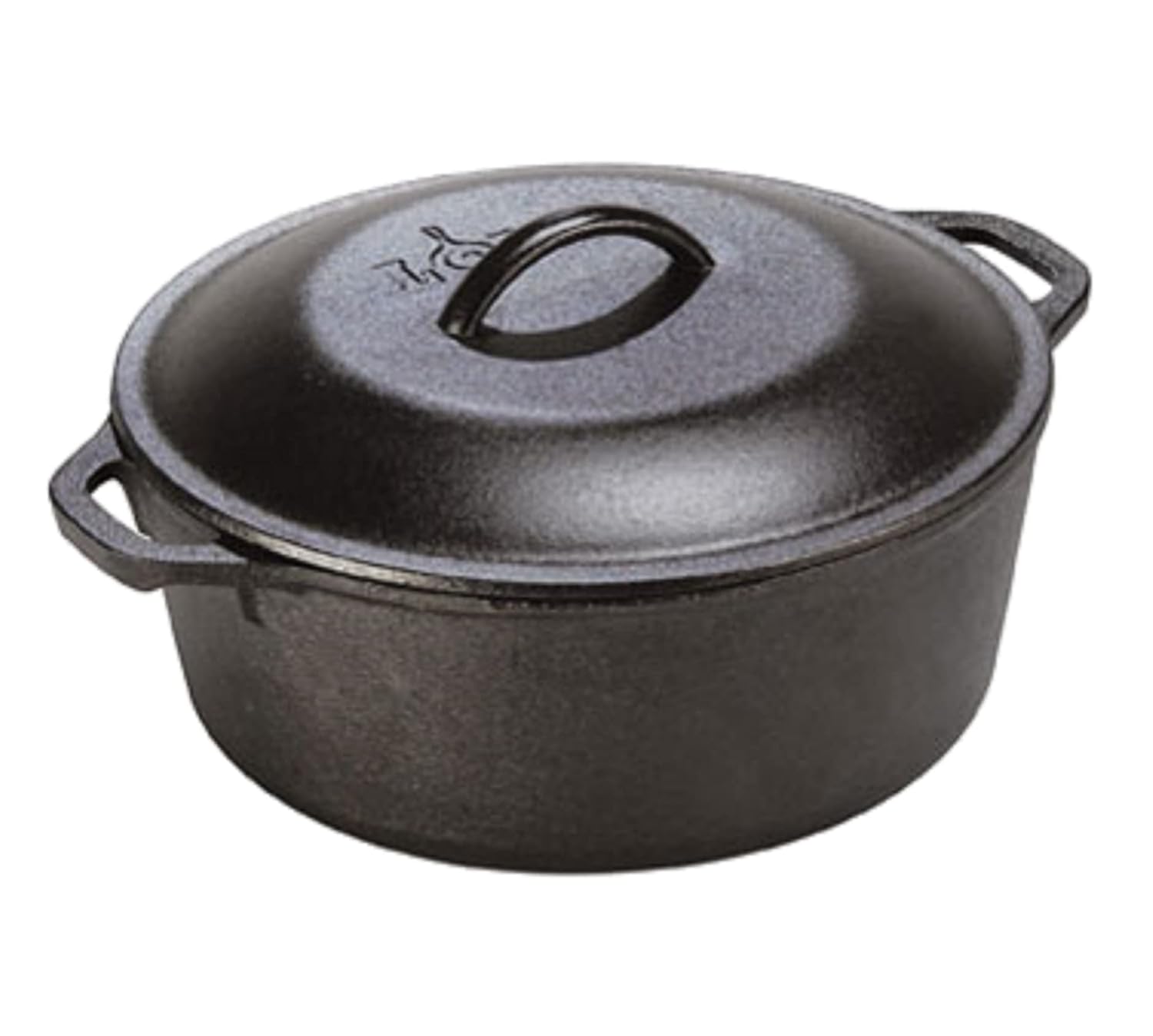
The Lodge 5-Quart Cast Iron Dutch Oven is the pot that quietly does what a $400 enameled French oven does, minus the colored exterior and minus the careful handling. It is heavy, plain, and made in South Pittsburg, Tennessee. If you want a Dutch oven that will outlast your kitchen renovation, your next move, and probably you, this is the one I tell most people to buy first.
What you're actually buying
The L8DOL3 is a 5-quart, pre-seasoned bare cast iron Dutch oven with looped side handles and a matching cast iron lid. It is unfinished raw iron (no enamel coating), seasoned at the factory with vegetable oil. Dimensions are roughly 10.25 inches in diameter and 4 inches deep, with a lid that adds a bit more height. It weighs around 12 pounds before food goes in.
It is made in the USA — Lodge has been casting iron in the same Tennessee foundry since 1896. The pot is oven-safe to any temperature your home oven will hit, induction-compatible, and works on every other heat source including open campfire coals.
The looped handles are integral cast — they're part of the pot itself, not bolted on — which is why the lid does not have a flat sit-down knob and the side grips are short, hot loops that need a thick towel or mitt every single time.
Performance and real-world use
Cast iron's appeal is heat retention. The 5-quart pot holds temperature long after you turn the burner off, which is why it is the default vessel for no-knead bread, braises, deep-fried chicken, and slow-cooked beans. Bread bakers in particular reach for this size — the 5-quart is the sweet spot for a single boule of country loaf.
Searing meat in it is excellent once the iron is fully heated. Cast iron takes longer to come up to temperature than stainless steel, so you preheat it for several minutes on medium before adding oil. Once it is hot, fond development is exceptional and you can deglaze straight from sear to braise without changing pans.
The pre-seasoning is functional but rough. You can fry, sear, and braise on it out of the box, but eggs will stick for the first dozen or so cooks. Over the first few months of use, the surface develops a darker, smoother patina that is genuinely nonstick for most things, though I would still not recommend it for delicate egg work — that is what a separate carbon steel or nonstick pan is for.
Cleanup is hot water and a stiff brush. Soap is fine in modern usage, despite the folklore — what you avoid is soaking the pot, putting it in the dishwasher, or leaving it wet. After washing, dry it on the burner and wipe a thin film of oil over the cooking surface. That is the routine. If you ever cook acidic foods like tomato sauce for hours, the bare iron will leach a little flavor and dull the patina, which is why enameled Dutch ovens exist for that specific use case.
- Made in the USA in a single factory that has been doing this for over 125 years
- 5-quart capacity is the most versatile single size — fits a whole chicken, a boule of bread, or a 4-6 person braise
- Indestructible: short of a hammer, you cannot meaningfully damage it; a rusted Lodge can be stripped and re-seasoned to like-new
- Works on every heat source, including induction and open campfire
- Roughly a quarter the price of an enameled equivalent from premium European brands
- Pre-seasoned out of the box, ready to use immediately
- Heavy: 12 pounds empty, more like 15+ loaded, which is genuinely hard for some users to lift one-handed
- Bare iron is not suited for long acidic cooks (tomato sauce, wine-heavy braises will dull the seasoning over time)
- Looped handles get blazing hot and have no insulated grip — a towel or mitt is mandatory, every time
- The lid has no knob, just a small loop, which makes maneuvering it more awkward than a French oven lid
- Factory seasoning is rougher and patchier than what you can achieve at home over a few months of use
- Not dishwasher-safe and cannot be soaked
If you are a home cook who wants one Dutch oven for the next twenty-plus years and you do not need the visual appeal of an enameled exterior, this is the buy. It is also the right choice for bread bakers — the bare iron and tight-sealing lid are ideal for no-knead and sourdough boules, and there is no enamel to crack from oven preheats at 500°F.
If you cook a lot of tomato-based or wine-heavy braises, get an enameled Dutch oven instead — Le Creuset, Staub, or a less expensive Lodge enameled model will all handle acidity without seasoning damage. Also skip it if lifting 12+ pounds with two hands sounds uncomfortable; the Lodge is genuinely heavy and a 3.6-quart enameled pot may serve you better day-to-day.
The Lodge 5-Quart Cast Iron Dutch Oven is the most cost-effective serious cookware purchase you can make. It does not look like a kitchen showpiece, but it will outlast every nonstick pan you own combined. Pair it with an enameled pot for acidic cooking and you have most of a lifetime cookware collection for under $250. **4.5 out of 5** — the half-point comes off for the rough factory seasoning and the hot, awkward handles, both of which are inherent trade-offs of the design rather than defects.
