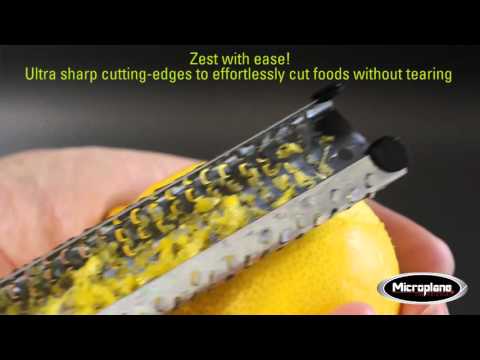
Microplane Premium Classic Zester/Grater 46020 Review: Still the One to Buy

The Microplane 46020 is one of those rare kitchen tools where the answer to "which one should I buy?" has been the same for twenty years: this one. It is the long, narrow, surgical-steel zester that quietly lives in every restaurant kitchen and most serious home kitchens, and after a couple of decades on the market it still has no real challenger at the price.
What you're actually buying
A long, narrow zester/grater with a photo-etched 18/8 stainless steel blade and a soft-grip black plastic handle with non-scratch end tabs. The blade carries hundreds of tiny, blade-like teeth — Microplane originated this design by adapting woodworking rasp technology, and the etching process is what gives the teeth their characteristic sharpness. The plastic cover is included, the tool is dishwasher safe, and the whole thing is light enough to use single-handed over a bowl or pan.
The 46020 is specifically the "Premium Classic" — soft-touch handle, surgical-grade etched blade — as opposed to the older hard-plastic-handle Classic or the chunkier Gourmet and Coarse models. If you only own one Microplane, this is the one to own.
Performance and real-world use
On lemon and orange zest it produces a near-fluffy pile of pure colored peel with almost no pith — the blade is sharp enough that you don't have to press hard, which is exactly why the pith stays behind. On parmesan, hard pecorino, or aged gouda, it shaves a snowfall of cheese that melts almost instantly into pasta or risotto. Garlic clove pressed lengthwise across the blade turns into a paste; the same trick works on fresh ginger if you grate against the grain.
Whole nutmeg, dark chocolate, fresh horseradish, and frozen butter all behave well. The blade is sharp enough that you should respect it the way you would a paring knife — knuckles get nicked on this thing more than on almost any other kitchen tool, especially as you near the end of a small piece of cheese.
Cleanup is unfussy: a stiff brush under running water clears most residue, the dishwasher handles the rest. The blade does eventually dull — usually after several years of regular use — and replacement, not sharpening, is the answer when it does. At under twenty dollars, that's a reasonable lifecycle.
- Photo-etched blade is genuinely sharp out of the box and stays sharp for years
- Soft-touch handle is comfortable and grippy, even with wet hands
- Light, narrow profile fits in a drawer or hangs from the end tab
- Excellent at the things you actually buy a zester for: citrus, hard cheese, garlic, ginger, nutmeg, chocolate
- Dishwasher safe; protective cover included
- Cheap enough to replace when the blade eventually dulls
- Sharp enough that knuckles are at real risk on small pieces — a guard or stub-holder would be welcome
- Narrow profile makes it a poor choice for grating piles of soft cheese or vegetables — wrong tool, wrong geometry
- Plastic handle is not heatproof; keep it away from hot pans
- Blade dulls slowly but cannot be resharpened — eventually you replace, not service
Anyone who zests citrus, finishes pasta with parmesan, grates fresh garlic or ginger into a marinade, or wants whole nutmeg in their bechamel. Home cooks upgrading from a box grater's fine side, which is almost always inferior. Restaurant prep cooks — this is already what they use.
People who grate large volumes of soft cheese, shred cabbage for slaw, or hash potatoes — get a box grater or a food processor for that work; this tool is the wrong shape for bulk. Anyone afraid of sharp edges should consider a model with a finger guard.